











How to Choose the Right SPC Flooring Supplier in 2026: A Buyer’s Checklist
-
 By Sytech
-
09 Jun, 2026
-


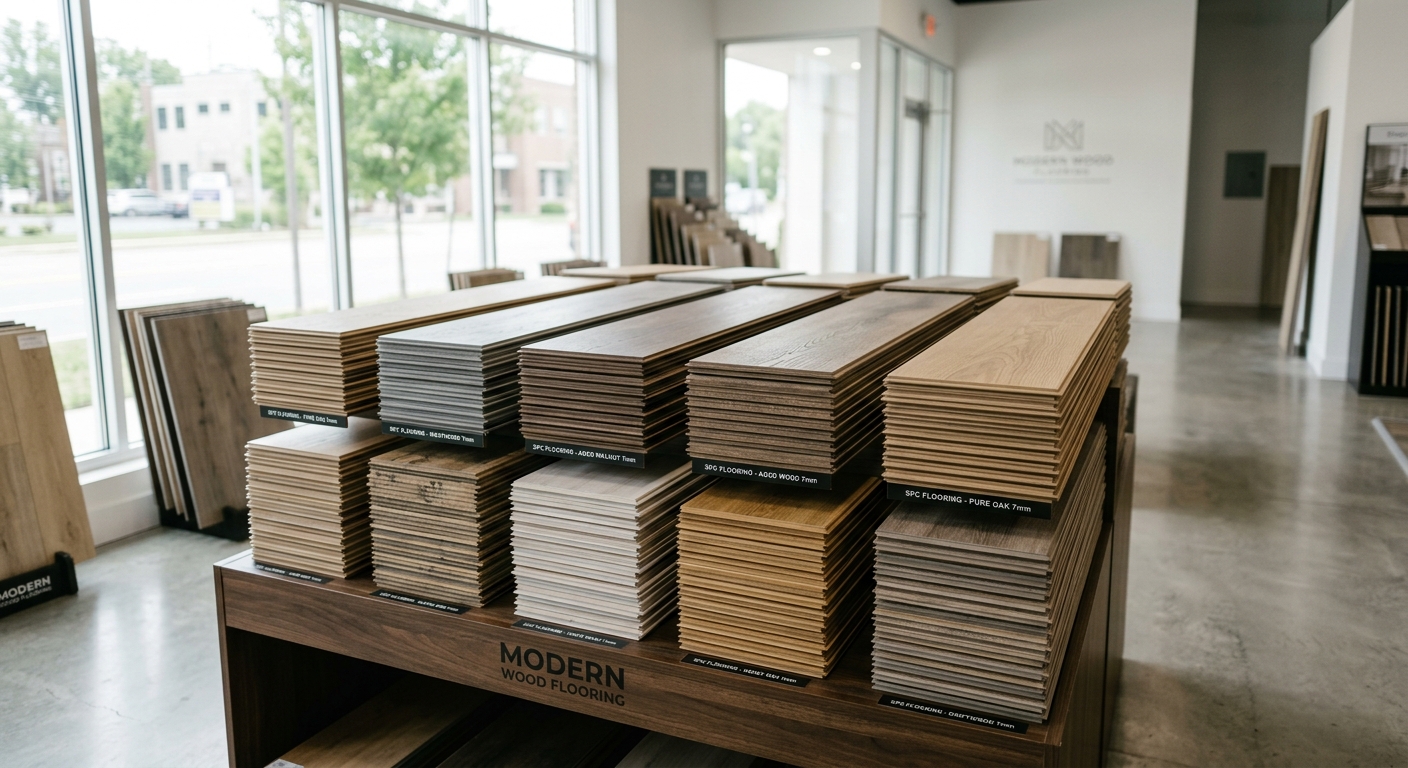
Choosing the right SPC flooring supplier in 2026 comes down to seven verifiable things: real factory ownership, controlled raw materials, honest wear-layer specs, documented dimensional stability, third-party QC reports, realistic lead times, and an after-sales process you can actually use. If a supplier can’t show you all seven on request, keep looking. The rest of this checklist explains what to ask for, what good answers look like, and the small details that separate a reliable partner from a costly headache.
Start by Verifying the Factory — Not Just the Website
The single most common mistake buyers make is treating a polished website as proof of a factory. In 2026, anyone can build a beautiful catalog page. Production capacity is harder to fake.
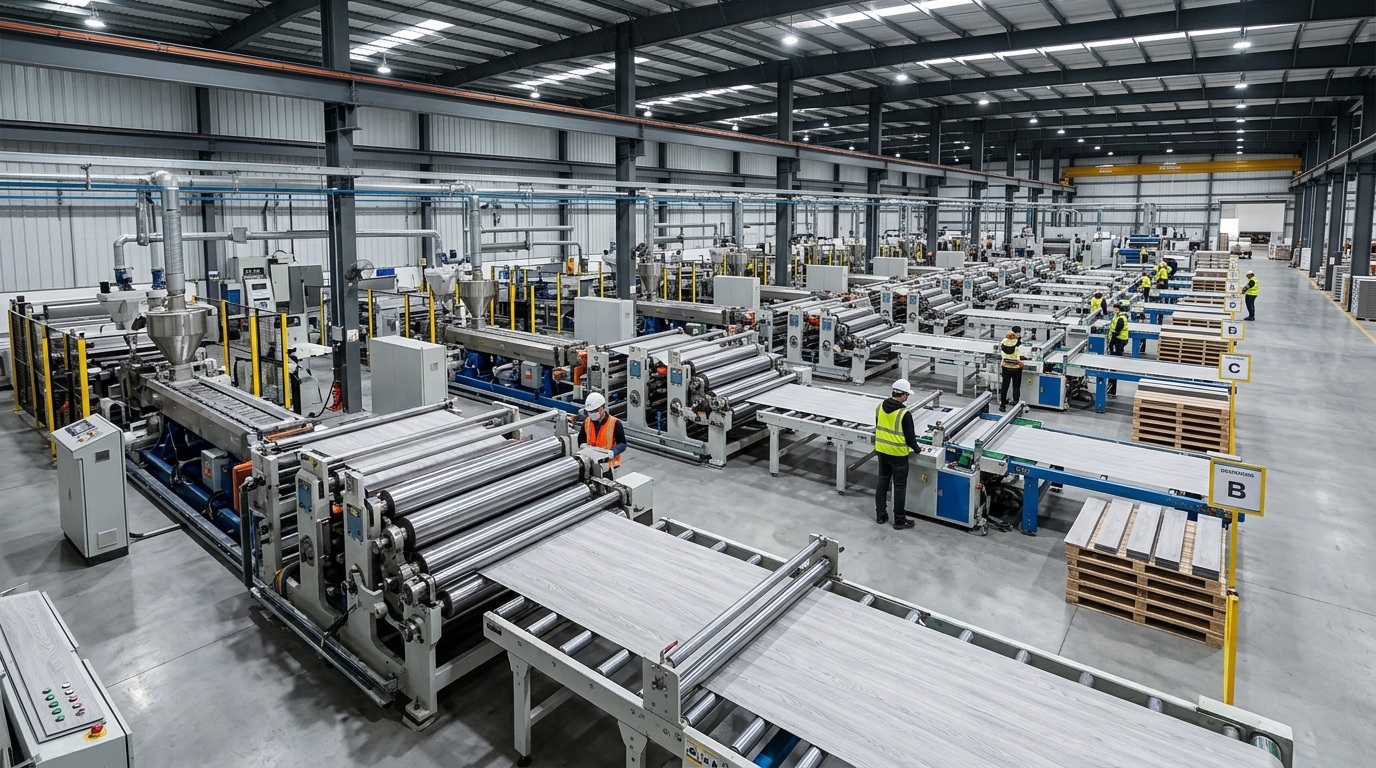
Ask for three specific things: a live video walk-through of the extrusion lines, the business license showing manufacturing scope (not just trading), and the address pin on a satellite map. Cross-check the address against shipping records on a customs database. A real SPC manufacturer typically runs anywhere from 4 to 30+ extrusion lines, with co-extrusion equipment, IXPE laminating stations, and UV coating tunnels visible in the footage.
For instance, a Canadian distributor we worked with last year had been burned by a “factory” that turned out to be a 2-person office reselling from three different mills — color batches never matched between containers. After switching to a vertically integrated supplier with its own raw material sourcing, color consistency stopped being a complaint line. You can see more about how integrated production works on our About Us page.
Pin Down the Raw Materials — This Is Where Quality Lives or Dies
SPC flooring is roughly 60–70% calcium carbonate and 30–40% virgin PVC resin, plus stabilizers. Cheap suppliers cut corners here in ways the finished plank hides — until your client installs it.
What to ask for specifically
- Calcium carbonate mesh size: 800–1250 mesh is standard. Coarser filler creates brittle boards.
- Virgin vs. recycled PVC: insist on 100% virgin resin for the core. Recycled content cracks at low temperatures and warps near radiant heating.
- Stabilizer type: calcium-zinc only. Lead-based stabilizers are banned in most importing markets and will fail REACH/CE testing.
- Plasticizer content: SPC should contain virtually none. If the supplier mentions DOP or DINP, you’re being quoted on a hybrid LVT, not true SPC.
Request a recent SGS or Intertek raw material report dated within the last 12 months. If they send you something from 2022, that’s a flag.
Read the Wear Layer Spec Honestly
Here’s a quiet industry truth: wear layer thickness is the most lied-about number in SPC sourcing. A “0.5mm” wear layer measured at one micron over 0.3mm is technically not 0.5mm. Always ask for the measured value, not the nominal one.
Match the wear layer to the project
- 0.3mm (12 mil): residential bedrooms, low traffic only.
- 0.5mm (20 mil): standard residential, light commercial — apartments, small offices.
- 0.7mm (28 mil): hotels, retail, medium commercial.
- 1.0mm+ (40 mil): airports, schools, hospitals, heavy commercial.
A German project buyer recently specified 0.55mm for a 240-room hotel chain. The cheapest quote came in 18% lower — and the wear layer measured 0.41mm under a micrometer. The difference would have shown up as visible scuffing within 18 months in corridor zones. Pay for a pre-shipment sample and measure it yourself.
Demand Dimensional Stability Data — Especially for Hot Climates
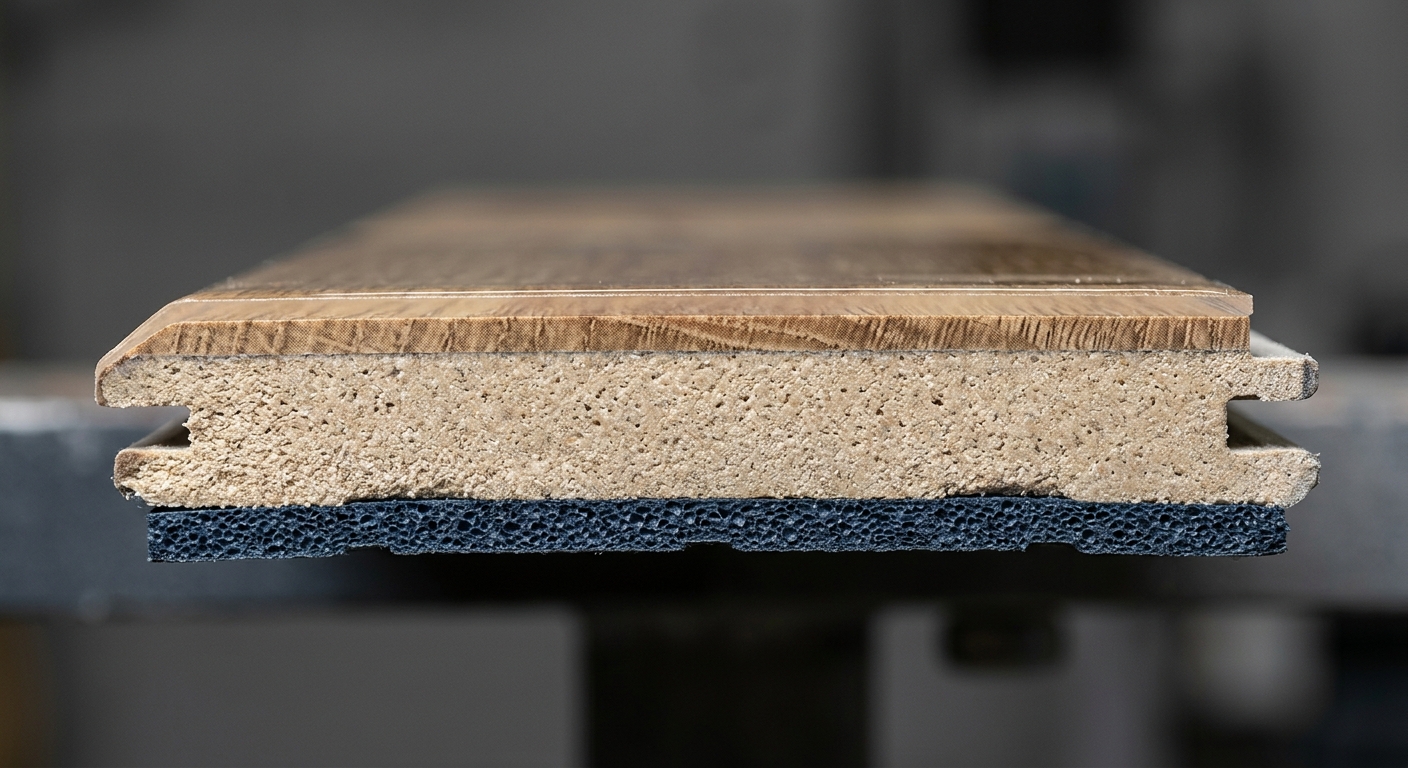
If you ship SPC to the Middle East, Australia, Southeast Asia, or southern US, dimensional stability is non-negotiable. The industry benchmark is ≤0.10% expansion at 80°C per ISO 23999. Anything above 0.15% will gap and lift in real-world conditions.
Ask the supplier for the actual lab report — not a marketing claim. A good factory will also tell you their internal QC threshold (often stricter, around 0.08%) and how often they run the test. Weekly is good, per-batch is excellent.
Also check residual indentation (ISO 24343-1, should be ≤0.10mm) and locking system tensile strength. The Unilin or Välinge click systems have published minimum specs — if the supplier uses a generic click, ask which mold and at what tolerance.
Ask About QC at Three Stages, Not One
Suppliers love showing the final inspection line. That’s the easy part. What separates serious manufacturers is in-process control.
Three stages that matter
- Incoming raw materials: every batch of PVC and calcium carbonate tested for moisture, whiteness, and mesh size before it enters production.
- In-line during extrusion: continuous thickness gauges, density checks every 30 minutes, color spectrophotometer readings against a master standard.
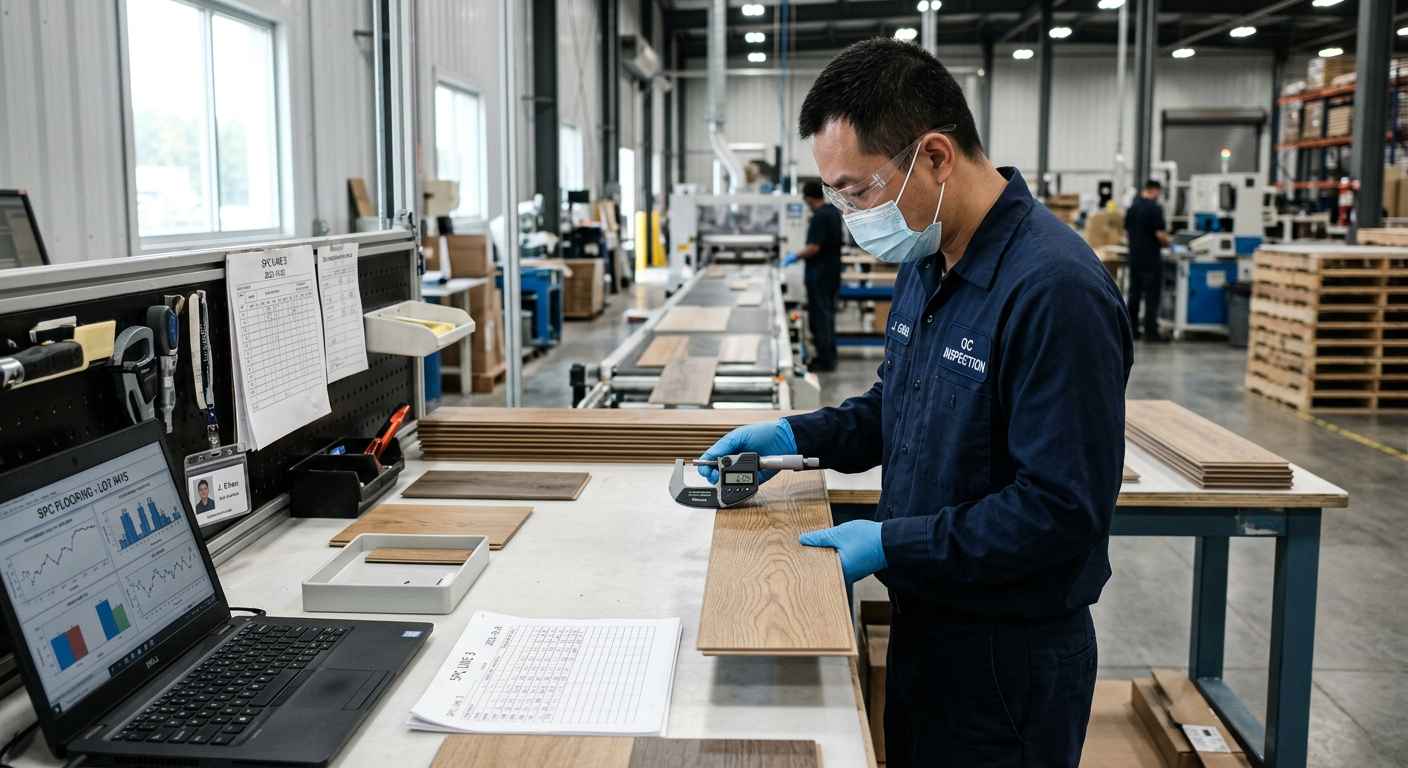
- Pre-packaging: visual inspection, click-test on randomly sampled planks, dimension verification, and water-absorption spot checks.
Request the supplier’s QC SOP as a document. If they can email you a real procedure within a day, they have one. If they need a week to “prepare” it, they’re writing it for you. For more on how we approach quality control across our product lines, see the Products page and the inspection notes per category.
Get Lead Times in Writing — and Understand What Drives Them
A 1x40HQ container of SPC flooring is roughly 2,200–2,400 m². Realistic production lead times in 2026 look like this:
- Stock colors, 1–2 containers: 15–25 days.
- Custom decor film, 1 container: 30–40 days (film printing is the bottleneck, not extrusion).
- OEM packaging with custom click + brand box: 40–55 days.
- Mixed-product orders (SPC + WPC decking + wall panels): align with the slowest item.
Watch for two red flags: a supplier promising 10-day production on custom orders (impossible if the decor film alone takes 3 weeks), and a supplier refusing to commit lead time in the PI. Lead time should be a written clause with a penalty or remedy if missed, not a verbal promise on WeChat.
Check the Certifications That Actually Match Your Market
Don’t collect certificates — match them to your import country. Generic “CE” on flooring is meaningless; SPC isn’t a CE-regulated product category in most cases. What matters:
- USA: FloorScore (indoor air quality), CARB Phase 2, and TSCA Title VI compliance.
- EU: EN 14041 (CE marking for floor coverings), REACH, and Bfl-s1 fire rating for commercial projects.
- Australia: AS/ISO 10874 abrasion class, plus formaldehyde testing.
- Middle East: SASO or G-Mark depending on destination.
- Global commercial: ISO 14001 (environmental), ISO 9001 (quality management).
Verify certificates by certificate number on the issuing body’s website. Photoshopped certifications are still circulating in 2026 — and customs holds them up.
Stress-Test the After-Sales Process Before You Pay
Every supplier sounds responsive before the deposit clears. Test what happens after.
Send a hypothetical scenario in writing: “If 5% of planks in container #2 show edge gapping after installation, what is your claim process and timeline?” A solid supplier replies within 24 hours with a clear procedure — photo evidence required, third-party inspection optional, replacement or credit decision within 14 days, and shipment of replacements with the next order.
A vague answer (“don’t worry, we’ll handle it”) is the worst possible signal. So is a clause buried in the PI that limits claims to 30 days after arrival — SPC defects often surface 60–90 days after installation as the floor acclimates. Negotiate a 12-month manufacturing defect warranty minimum, with claim window of at least 60 days from installation.
Don’t Skip the Sample Round — But Sample Smart
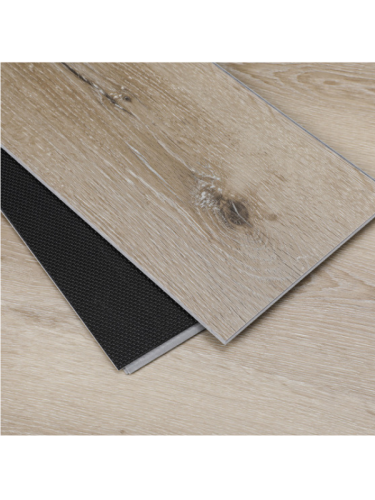
Free A4 samples tell you almost nothing. They’re hand-selected, often from a different production run than what ships. Pay for what we call a “production-representative sample”: 5–10 full-size planks pulled randomly from a recent batch, shipped in original packaging.
Inspect for:
- Click engagement — should snap firmly without forcing, and disengage cleanly.
- Bevel consistency across planks.
- Color match between planks (lay 6 side by side under daylight).
- Surface emboss alignment with the decor pattern (“EIR” — embossed in register — is harder to fake than a generic emboss).
- Plank flatness on a glass table — no rocking.
For a UK contractor sourcing for 14 student housing blocks, the production-representative sample round caught a misaligned emboss on one of three colors before mass production. The fix added 5 days but saved a six-figure rework bill.
Putting the Checklist to Work
A reliable SPC flooring partner in 2026 is one who answers technical questions with specifics, sends documents without stalling, commits dates in writing, and treats your claim email the same way they treated your inquiry email. Run every prospective supplier through these nine checks — factory verification, raw materials, wear layer, dimensional stability, three-stage QC, lead time clauses, market-specific certifications, after-sales process, and a paid production sample. The ones who pass are the ones worth a long-term contract.
BONA New Material Tech operates its own SPC flooring production lines alongside PVC and WPC wall panels, WPC decking, ceiling panels, and decorative cladding — with raw material control, third-party tested specs, and an export team that handles documentation for 60+ markets. If you’d like a quote with full technical data and a production-representative sample, contact us or browse our current product range to start the conversation.
-
PVC vs WPC vs SPC Wall Panels: Which One Wins for Your Project?
09 Jun, 2026
-
UV Marble Sheet Buying Guide: How to Source the Right Panels in 2026
09 Jun, 2026
-
UV Marble Panels in Hotel Lobbies: 5 Real Projects That Replaced Real Stone
09 Jun, 2026
-
WPC Decking Maintenance Tips: A Practical Care Guide for Long-Lasting Outdoor Decks
09 Jun, 2026