




SPC Flooring for Schools and Offices: Balancing Durability, Cost, and Safety
-
 By Sytech
-
 15 Oct, 2026
-


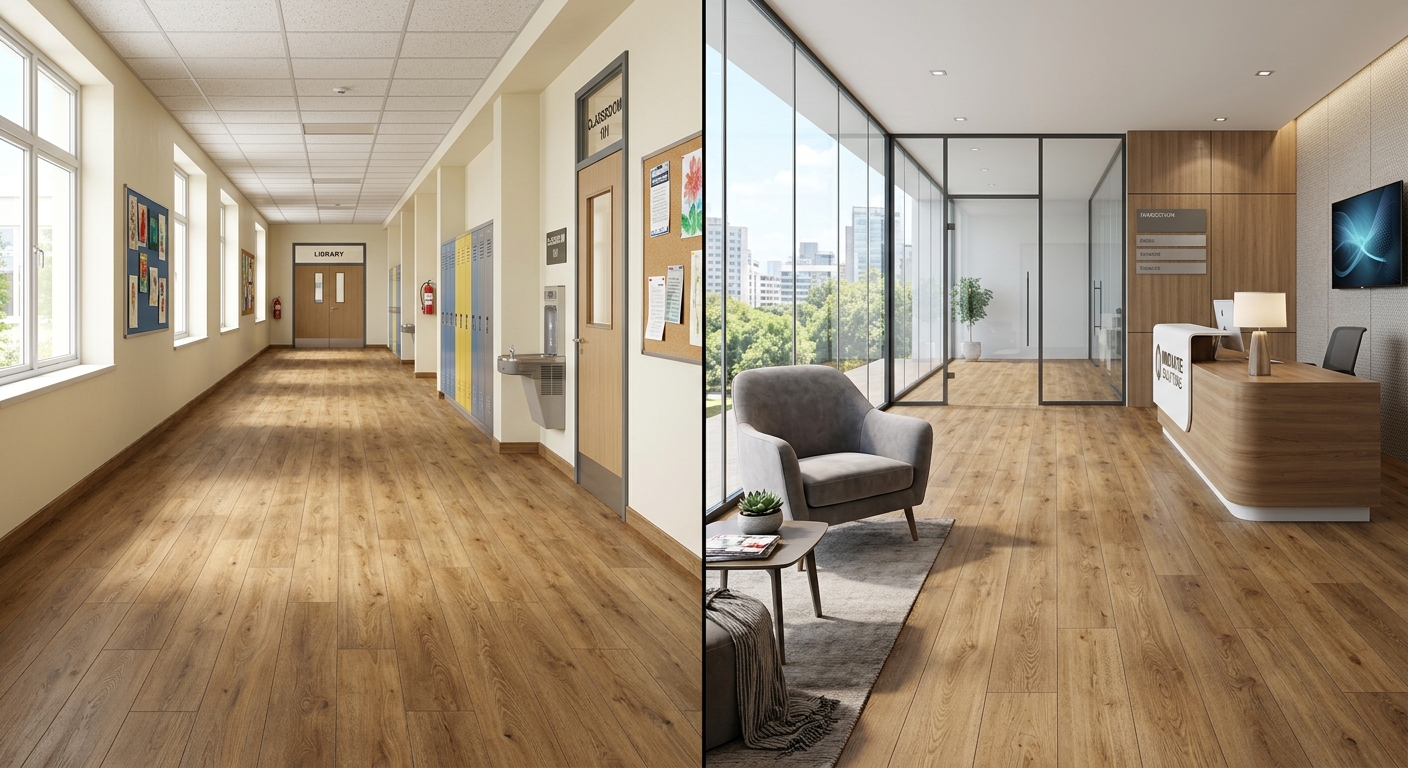
SPC flooring works for schools and offices because it's the rare material that checks all three boxes procurement teams actually care about: it survives 500+ students a day or endless rolling office chairs without denting, it costs less over a 10-year lifecycle than carpet or ceramic tile, and its rigid core plus textured wear layer meets slip-resistance standards that matter for liability. That's not a marketing claim — it's why so many school district and corporate facilities managers have quietly switched over the past few years. The rest of this guide breaks down exactly how to spec it correctly for institutional use, because getting the wear layer, underlayment, and fire rating wrong can turn a smart material choice into an expensive mistake.
Why Institutional Buyers Are Moving Away from Carpet and VCT
Ask any school maintenance supervisor what eats their budget and carpet replacement will come up fast. Carpet tile in a classroom corridor typically needs replacing every 5-7 years due to staining, wear paths, and odor absorption — and that's assuming no water damage from a burst pipe or spilled science experiment.
SPC flooring flips that math. Because the core is stone-plastic composite (calcium carbonate plus PVC resin, not wood fiber), it's 100% waterproof straight through — no swelling, no mold growth, no replacing a whole classroom because one corner got wet. Offices see the same benefit in break rooms and near building entrances where moisture tracks in daily.
The Real Cost Comparison
Upfront, SPC often costs slightly more per square meter than basic VCT. But when you factor in a 10-15 year lifespan versus VCT's constant waxing and stripping cycle, SPC wins on total cost of ownership. For a deeper breakdown on selecting SPC for demanding commercial spaces, see our guide on how to choose the right SPC flooring for high-traffic commercial projects.
Wear Layer Thickness: The Number That Actually Determines Durability
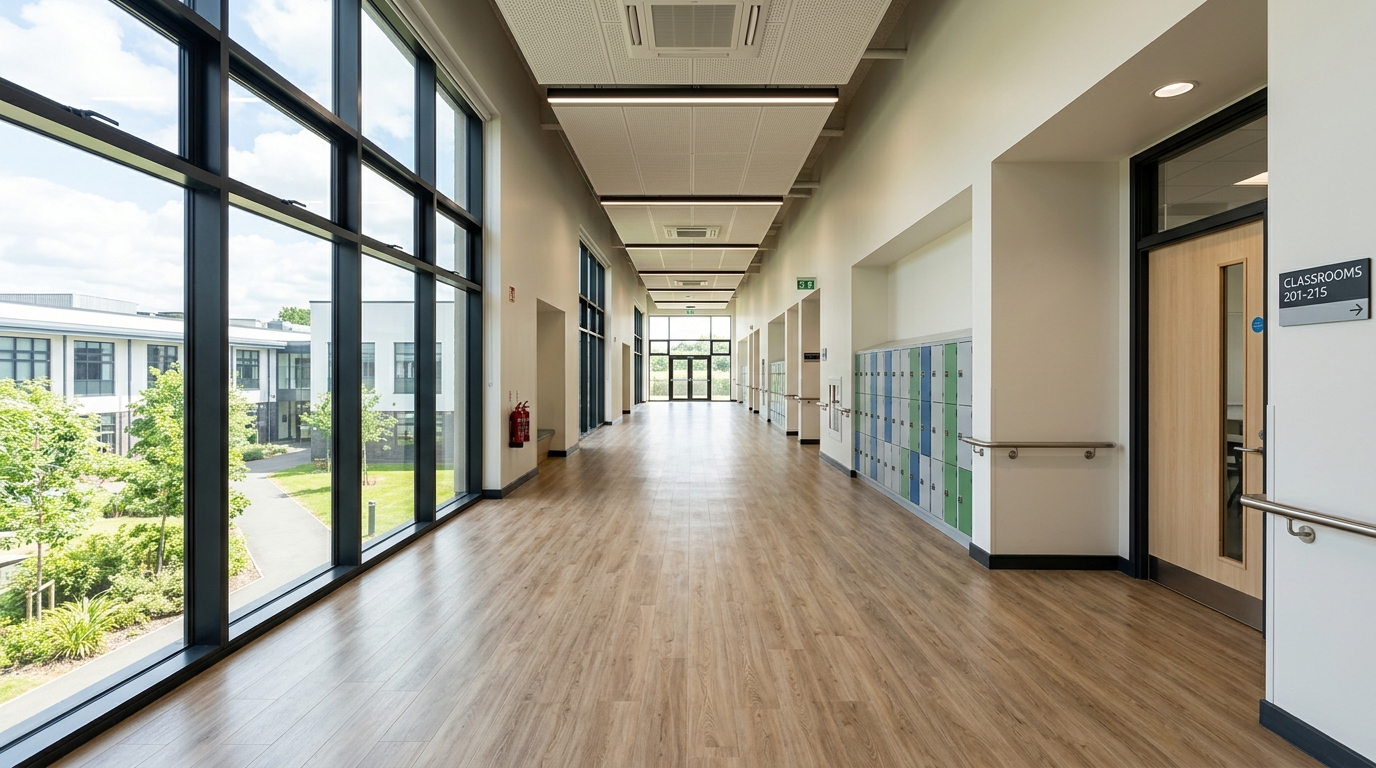
Here's a mistake procurement teams make constantly: they compare SPC flooring by price per square meter and ignore wear layer thickness — the single spec that determines how long the floor actually lasts under heavy foot traffic.
For schools and offices, don't go below a 0.3mm wear layer, and for high-traffic zones like main corridors, cafeterias, and reception areas, push for 0.5mm or higher. A thin 0.1mm wear layer might look identical on day one but will show scuffing and dulling within 12-18 months in a busy hallway.
What to Ask Your Supplier
- Request the exact wear layer thickness in writing on the spec sheet, not just "heavy commercial grade."
- Ask for AC (abrasion class) rating — AC4 or AC5 is appropriate for institutional traffic.
- Request a sample that's been through accelerated wear testing, not just a fresh-cut showroom piece.
Slip Resistance and Fire Safety: Where Compliance Isn't Optional
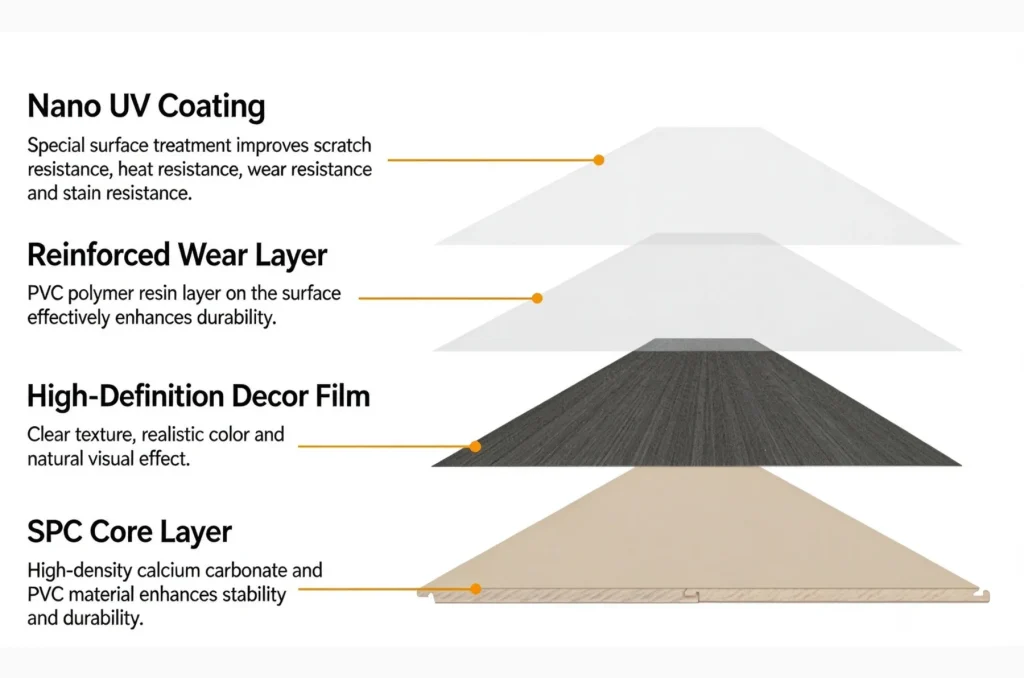
A school hallway with the wrong surface finish is a liability lawsuit waiting to happen. SPC flooring's slip resistance comes almost entirely from its surface texture and coating — a smooth glossy finish can look premium but performs poorly the moment it's wet from a mopped floor or tracked-in rain.
Look for products rated R10 or higher on the German DIN 51130 slip resistance scale, which is the standard most international building codes reference for corridors and public walkways. Embossed or matte textured finishes consistently outperform gloss finishes here, even though gloss photographs better in a showroom.
Fire Rating Matters More Than You'd Think
Offices and schools both fall under stricter fire code categories than residential buildings. Confirm your SPC flooring carries a Bfl-s1 rating (EN 13501-1) or equivalent — this measures how the floor performs in a fire in terms of flame spread and smoke production. Don't take a supplier's word for it; ask for the actual test certificate, not a generic product brochure claim.
A Real-World Example: Retrofitting a Mid-Size Office Without Shutting Down Operations
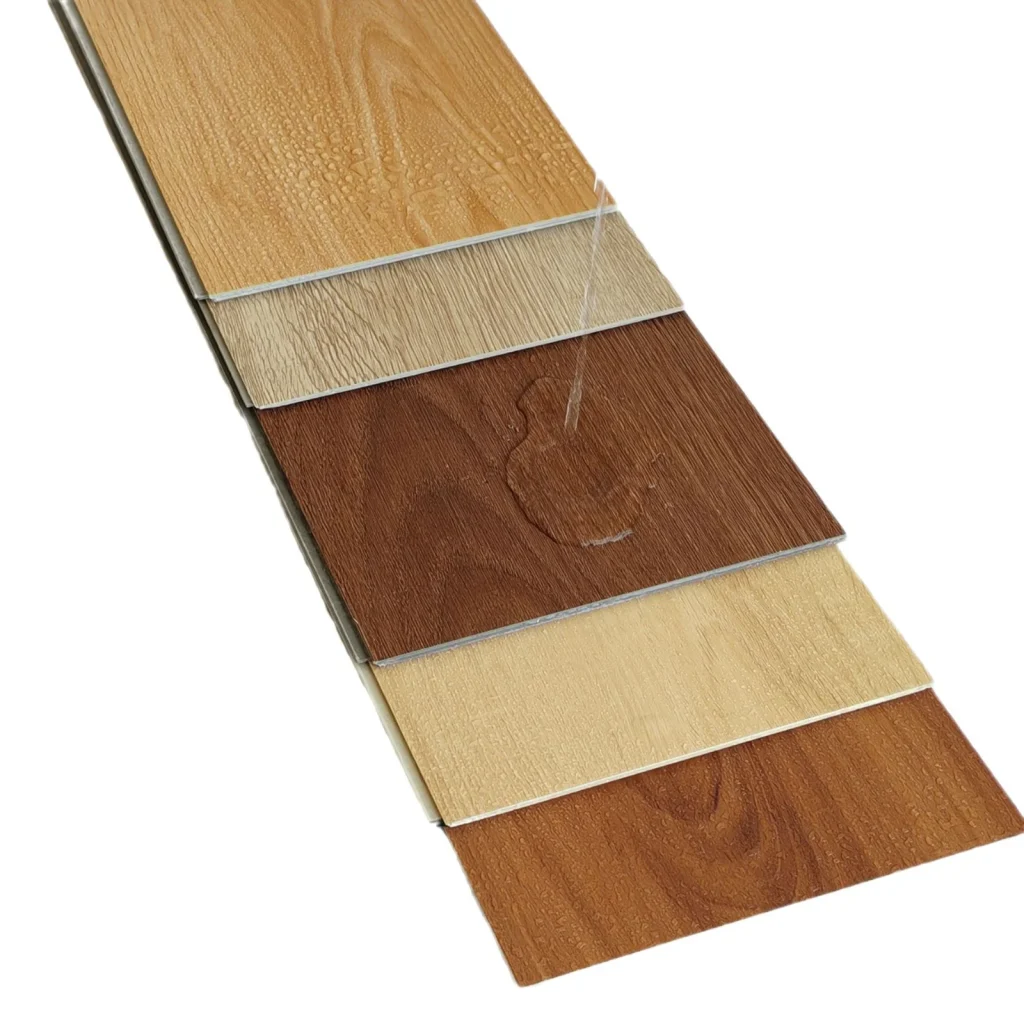
A regional distributor client of ours needed to replace ceramic tile flooring across three floors of an occupied office building. The catch: no more than one weekend of downtime per floor was acceptable, since the client couldn't afford to shut down operations for a week at a time.
SPC's click-lock installation system made this possible. Crews floated the new flooring directly over the existing tile substrate (after leveling minor imperfections), avoiding the demolition, dust, and adhesive cure time that ceramic tile removal would have required. Each floor was completed over a single weekend with zero VOC odor lingering into Monday morning — a real concern in an occupied building with staff returning immediately.
This kind of retrofit scenario is increasingly common. Facilities managers are realizing SPC lets them upgrade flooring in phases without the operational disruption that ceramic or hardwood replacement demands.
Sound and Comfort: The Trade-Off Nobody Mentions
SPC flooring's biggest weakness compared to carpet is impact noise. Rigid core flooring transmits footstep sound and rolling chair noise more than soft flooring does — a real issue in open-plan offices or classrooms directly above other occupied rooms.
The fix isn't complicated: specify SPC flooring with an attached acoustic underlayment (typically 1-2mm of foam or cork bonded to the back), which can reduce impact sound transmission by 15-20 decibels. For projects where sound is a major concern — open offices with dense workstation layouts, for example — pairing SPC flooring with acoustic wall or ceiling panels addresses the noise issue from multiple angles rather than relying on flooring alone.
Color and Design Consistency Across Large Institutional Orders
A 40,000 square meter school district order and a 40 square meter classroom sample rarely look identical if the manufacturer isn't controlling batch consistency carefully. Color variation between production batches is one of the most common complaints from bulk institutional buyers — and it's often invisible until installers are halfway through laying a corridor and notice a visible seam where batches meet.
How to Prevent This Before You Order
- Request that your full order ships from a single production batch whenever the order size allows it.
- Ask for a pre-shipment inspection report that includes color and shade comparison across multiple cartons, not just one reference sample.
- For phased projects (renovating one wing per year, for instance), request the supplier retain the exact formulation and batch records so future orders match.
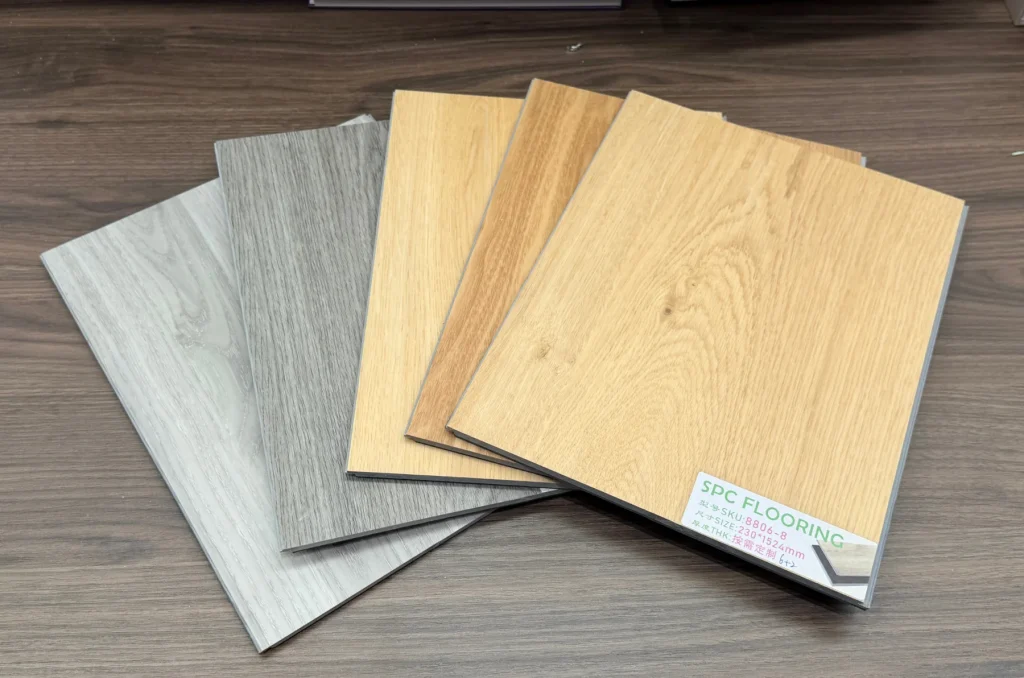
This is exactly the kind of quality control detail worth confirming before placing a bulk order — our guide on vetting a factory before a bulk order covers the inspection questions that apply just as much to flooring as wall panels.
Budgeting: What Actually Drives SPC Flooring Cost for Bulk Orders
Price per square meter for commercial SPC flooring typically ranges based on three factors: wear layer thickness, overall plank thickness (4mm to 8mm is common for institutional use), and whether the product includes attached underlayment. Thicker planks with attached underlayment cost more upfront but reduce separate underlayment purchase and labor time during installation.
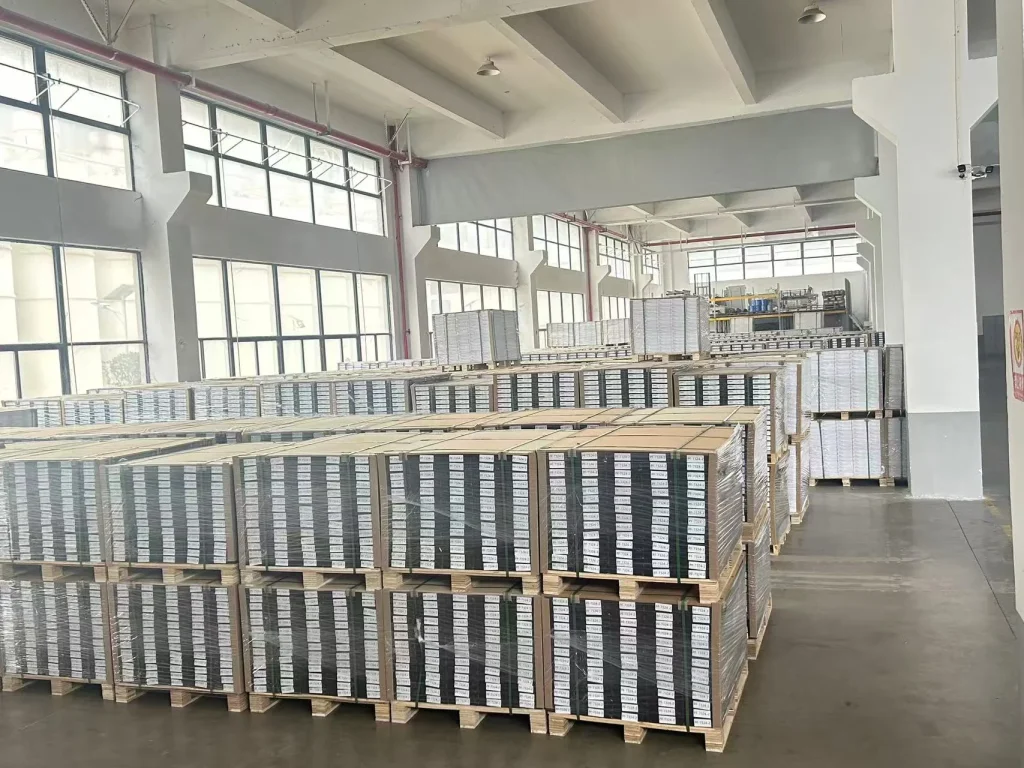
For large institutional tenders, buyers should also factor in container loading efficiency — how flooring cartons are packed affects shipping cost per square meter significantly on big orders. Poor packing can waste container space and inflate freight costs unnecessarily; see our notes on avoiding container loading mistakes for building material shipments generally.
Installation Considerations Specific to Schools and Offices
Occupied-building installation timing is the biggest logistical hurdle for both school and office SPC flooring projects. Schools generally need work completed during summer break or over long weekends; offices need phased weekend installs like the earlier example.
Subfloor prep matters more than most buyers expect. SPC's rigid core actually telegraphs subfloor imperfections more visibly than softer flooring — a small dip or ridge in an old concrete slab will show through as a slight flex or gap over time if not leveled first. Budget for self-leveling compound on older buildings rather than assuming the click-lock system alone will compensate.
-
PVC vs WPC vs SPC Wall Panels: Which One Wins for Your Project?
09 Jun, 2026
-
WPC Decking Maintenance Tips: A Practical Care Guide for Long-Lasting Outdoor Decks
09 Jun, 2026
-
UV Marble Sheet Buying Guide: How to Source the Right Panels in 2026
09 Jun, 2026
-
UV Marble Panels in Hotel Lobbies: 5 Real Projects That Replaced Real Stone
09 Jun, 2026